As dashboard, coaching, and tournament features developed in parallel, I owned product design as the sole designer from June 2024 to May 2026.
Focus
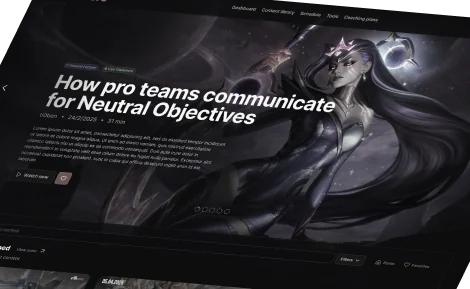
Cards, tables, and empty states formed a reusable set across the dashboard, content library, and reports, supported by shared logged-in navigation.
Approach
I defined navigation, status states, and mobile stacking rules to keep parallel feature tracks consistent during handoff and QA.
Outcome
The delivered dashboard and app-shell designs established shared UI patterns for coaching, tournaments, the schedule, and the content library.
July 2025 – May 2026
Tournament Platform
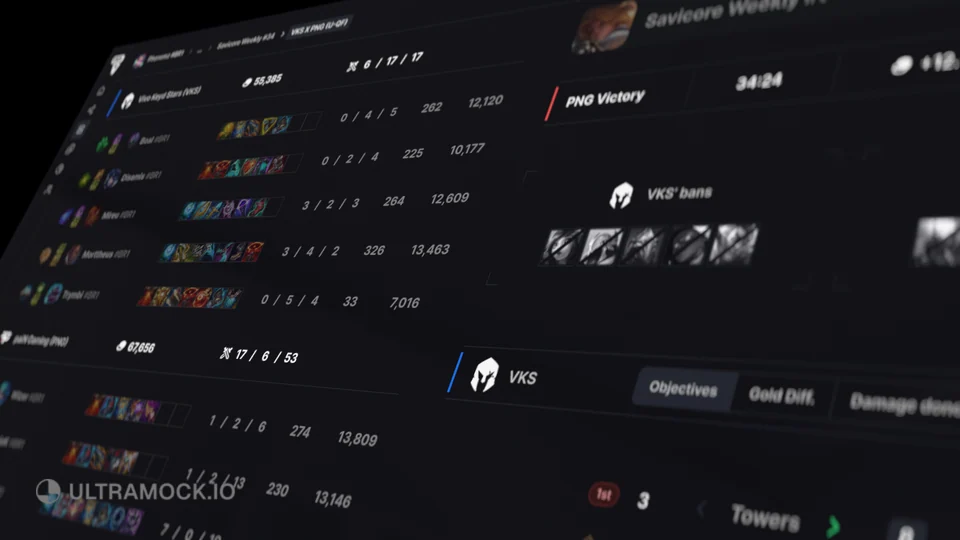
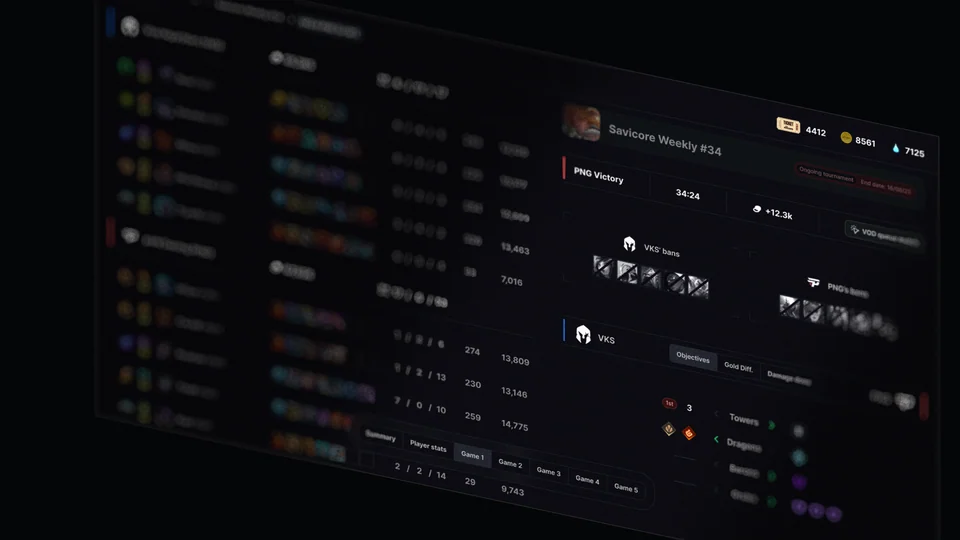
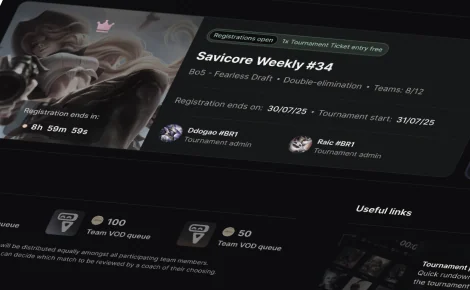
For tournament players, I designed event views, brackets, match pages, team recruitment, and player statistics around upcoming, live, and completed events.
Match formats, result proof, and Riot/API constraints were still being resolved while upcoming, live, and completed event views took shape.
Focus
To keep the MVP focused, I concentrated on event discovery, registration, brackets, team pages, and match details.
Approach
QA findings exposed questions about create/edit errors, bracket zoom, result proof, and player-stat displays; these informed the tournament lifecycle work.
Outcome
Alongside the tournament views, I delivered a QA trail covering event states, match summaries, brackets, and team pages for design and development review.
October – December 2025
Coach Booking
The 1-on-1 coaching flow connected coach discovery, booking, and confirmation with scheduling history and post-session reviews.
Before payment, players needed to understand the coach, price, and booking steps. After a session, scheduling history and reviews became part of the same flow.
Focus
I mapped discovery, booking, confirmation, history, and reviews together, including the empty states between those steps.
Approach
Each handoff had an explicit destination: coach card to profile, profile to booking modal, confirmation to history, and completed session to review.
Outcome
For desktop, tablet, and mobile, I delivered coaching screens with booking modals, review prompts, and empty states for first-time and returning users.
December 2025 – March 2026
Landing Page
Built in Framer, the redesigned landing page introduced League of Legends coaching, content, and tournaments across desktop and mobile.
Role
Product Designer / Framer
Date
December 2025 – March 2026
Responsibilities
Web UI, Motion, Story, Framer, Localization
Read the case studyClose the case studyContext, design decisions & outcome
Context
Coaching, content, and tournament features were taking shape behind the product’s public landing page. Its content needed to explain that work to visitors.
Focus
I organized responsive sections around coaching, tournaments, and player progression, with PT-BR copy throughout.
Approach
Framer components, mobile and tablet layouts, and interaction details evolved alongside the landing-page content.
Outcome
I delivered a revised landing-page direction with section layouts, localized copy, and motion specifications tied to the wider product build.